
A Business Card in Hand, Business in Conversation: How Paper Still Shapes Impressions in Seconds

In a world of QR codes, Instagram and LinkedIn, a small rectangle of paper still circulates around meeting tables, trade shows and networking events: the business card. It may seem outdated at first glance, but according to marketing and design specialists, the card remains one of the most effective tools for making a first impression—and making it last.
This report explains in accessible language why business cards still matter so much in company marketing, and details step by step how they are conceived and produced, from the concept to the paper that reaches a customer’s hands.
Business card design: why a piece of paper still matters
The figure often surprises those who think everything has gone digital: studies suggest that 72% of people form an opinion of a company based on its business card. In other words, before visiting a website or following the company on social media, the first judgment often happens right there, in the paper’s texture and the design seen in seconds. DEMARCA Design
This happens because a card serves a role no social network completely replaces. As an agency specializing in the subject explains, in an increasingly digital world, a business card offers a tangible form of marketing, remaining with the recipient as a physical reminder of the interaction. Unlike a contact saved on a phone, which can get lost among hundreds of others, a physical card has presence: it occupies space in a wallet, on a desk or in a card holder—and that alone is a form of recall. Printing Lovers
Another point specialists highlight is the practical role of cards in networking. As a digital marketing agency notes, instead of asking someone to type a name or search for an online profile on the spot, a card offers a quick, effective way to exchange information. This streamlines the process and ensures easy contact later, without mistakes or forgotten details. At a busy, noisy trade show, that speed matters. Interminas
Sebrae aptly summarizes the functions a card serves: telling people how to get in touch, networking and exchanging business information, reminding people who you and your company are, and strengthening business branding. It is, essentially, a miniature introduction to everything the brand represents. Inovação Sebrae Minas

Stage 1: what needs to appear on the business card
Before thinking about design, decide what will appear. It may sound obvious, but many cards fail at this basic stage, either through too much information or by omitting something essential.
According to a design agency, it is essential to consider layout, which should reflect the company’s visual identity and values, with certain indispensable information on every business card. In general, this list includes full name, job title, company name, telephone, email and, increasingly, a digital contact channel. FuturaIM
A golden rule of graphic design already emerges here: less is more. The same source stresses that clarity and legibility are crucial: choose fonts that are easy to read even at small sizes, avoiding too many different fonts—two or three at most—to maintain coherence. A business card has no room for visual indecision: every element needs to justify being there. FuturaIM
Stage 2: the brief and client involvement
As with creating a complete visual identity, a business card does not emerge fully formed in the designer’s mind. It begins with a conversation between the person commissioning it and the person creating it.
A design agency recommends active client involvement at this point: whichever agency or printer you choose, participating in the creation of the business card and giving the designer plenty of information helps deliver more interesting work and a satisfying result. The more the designer knows about the business, target audience and competitors, the better informed the visual decisions will be. Quatrocor
Stage 3: creating the layout—where visual identity comes in (continued)
Tools such as Adobe Express summarize this logic simply for beginners: ideally, give the business card the brand’s look by uploading the logo and using fonts and colors that match the company’s style. It is not about choosing what is “beautiful” in isolation; it is about choosing what faithfully represents that business. Adobe
At this stage, the designer tests different compositions: where the logo works best, which information hierarchy makes the most sense (emphasizing the name, role or company?), and how to balance text and white space. A card crowded with information tires the eye; a well-distributed card conveys organization and, by extension, professionalism.
Stage 4: choosing materials and finishes
This is where business cards differ from many other marketing materials: above all, they are physical objects that pass through people’s hands. Choosing paper and finish therefore matters as much as design.
According to a print specialist agency, the possibilities have expanded considerably in recent years: advanced printing technologies allow cards with textures, custom cuts and 3D effects, creating a distinctive tactile experience. Spot varnish, embossing, rounded corners and textured papers—each detail contributes to the sensation the card conveys when touched. FuturaIM
Sustainability has also entered this conversation. Concern for sustainability is increasingly present in business card production, and many professionals and companies choose recyclable materials to make them—a detail that also communicates brand values to the recipient. FuturaIM
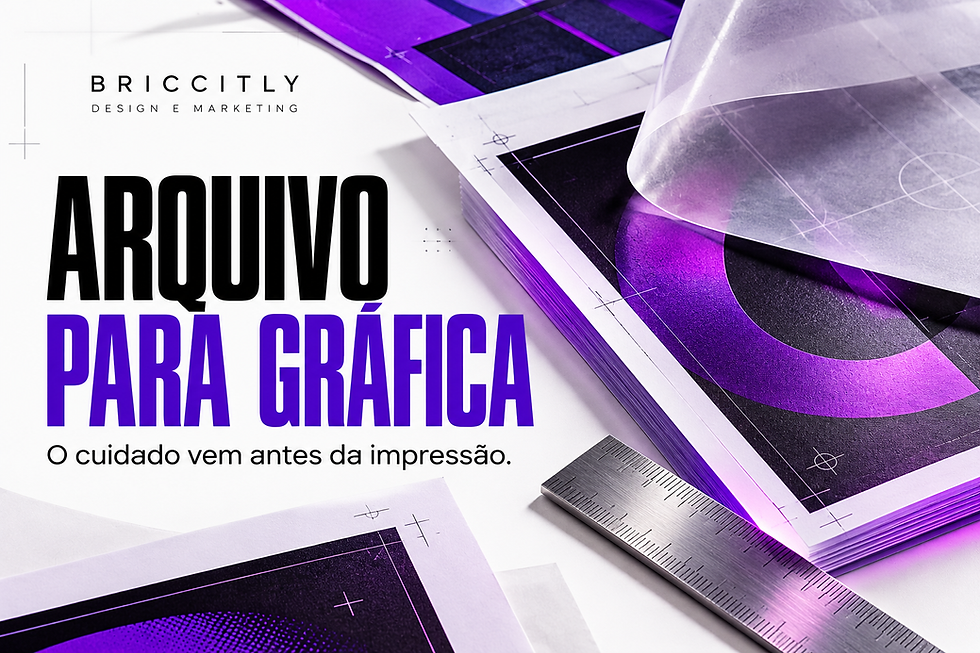
Stage 5: the printing process—from artwork to printed paper
Once the design is ready, the file goes to the printer, where the less visible but technically more complex part of the process happens. Print production specialists divide this phase into three main stages.
Prepress. This is the technical file-checking stage. According to a specialist printer, its purpose is to verify that client files meet the requested printing conditions, correcting file issues to obtain the best print quality. This is where mistakes such as unexpected colors or text cut off during printing are avoided. Mtall
Printing. This is the stage when design leaves the screen and becomes material: ideas take physical form through the actual printing process onto the desired substrate—in this case, the card’s paper. Today, most quick-print shops use digital printing for short runs, which has made the process much faster. As a technical publication explains, the image is transferred directly from the computer to paper using laser or inkjet printers, eliminating slower stages required in the past. Graficaativaba Embrapa
Finishing. This is the final stage, and perhaps the most decisive for the card’s final feel. It ranges from simple final trimming to more complex finishes such as folds, embossing, scoring and varnish. Finishing turns a printed sheet into a card truly ready to circulate, with precise edges, suitable thickness and, in many cases, the distinctive touch that makes someone want to keep it instead of throwing it away. Mtall
It is worth highlighting the speed technology has brought to this process: today, a thousand business cards can be produced in a few hours, something unthinkable just a few decades ago. Mtall

Stage 6: the card can also be digital
Finally, it is worth mentioning a trend growing year after year: digital business cards. Specialist platforms describe functions going far beyond a simple QR code. One tool, for example, includes lead-capture forms that automatically collect visitor information when someone views the card, as well as detailed analytics showing who viewed it, when and which sections received the most attention. Boqnews
This does not replace the physical card—at least for most professionals—but complements it, especially in sales and lead generation contexts where measuring results is part of the strategy.
Questions and answers: resolving common doubts
Questions
Is a physical business card worth having in 2026, when everything is so digital?
Yes. It serves a function digital tools do not completely replace: leaving something tangible in another person’s hand, increasing the chance of being remembered after the meeting.
Which information really needs to be on the card?
The essentials are name, job title, company name and a direct contact method (phone or email). Anything beyond that should be considered carefully to avoid cluttering the design.
Can I make my own card without hiring a designer?
Yes, using tools such as Adobe Express or Canva, which offer ready-made templates. But working with a professional tends to produce a result more aligned with brand identity and more strategic for business objectives.
Why do some printers ask to review the file before printing?
This is the prepress stage, designed specifically to prevent errors—unexpected colors, cropped text or poor image quality—before the card is actually printed.
A simple card or one with a special finish (varnish, embossing, textured paper)?
It depends on brand positioning. Special finishes increase cost but also perceived value and the chance of the card being kept rather than discarded.
Does a digital card replace a physical one?
Not necessarily; both can coexist. Digital stands out for its metrics (who viewed it, when and what attracted attention), while physical retains the advantage of tangible presence.
How long does producing a business card take?
With today’s digital printing technology, a batch of cards can be produced in a few hours, very different from the slower processes of decades past.


Comments